Technology, Justice, & Creative Practice
Welcome to The Experimental Humanities Collaborative Network
Broadcasting from the 5th Floor -- Seasons 1, 2, and 4
Student-led
Season 1:
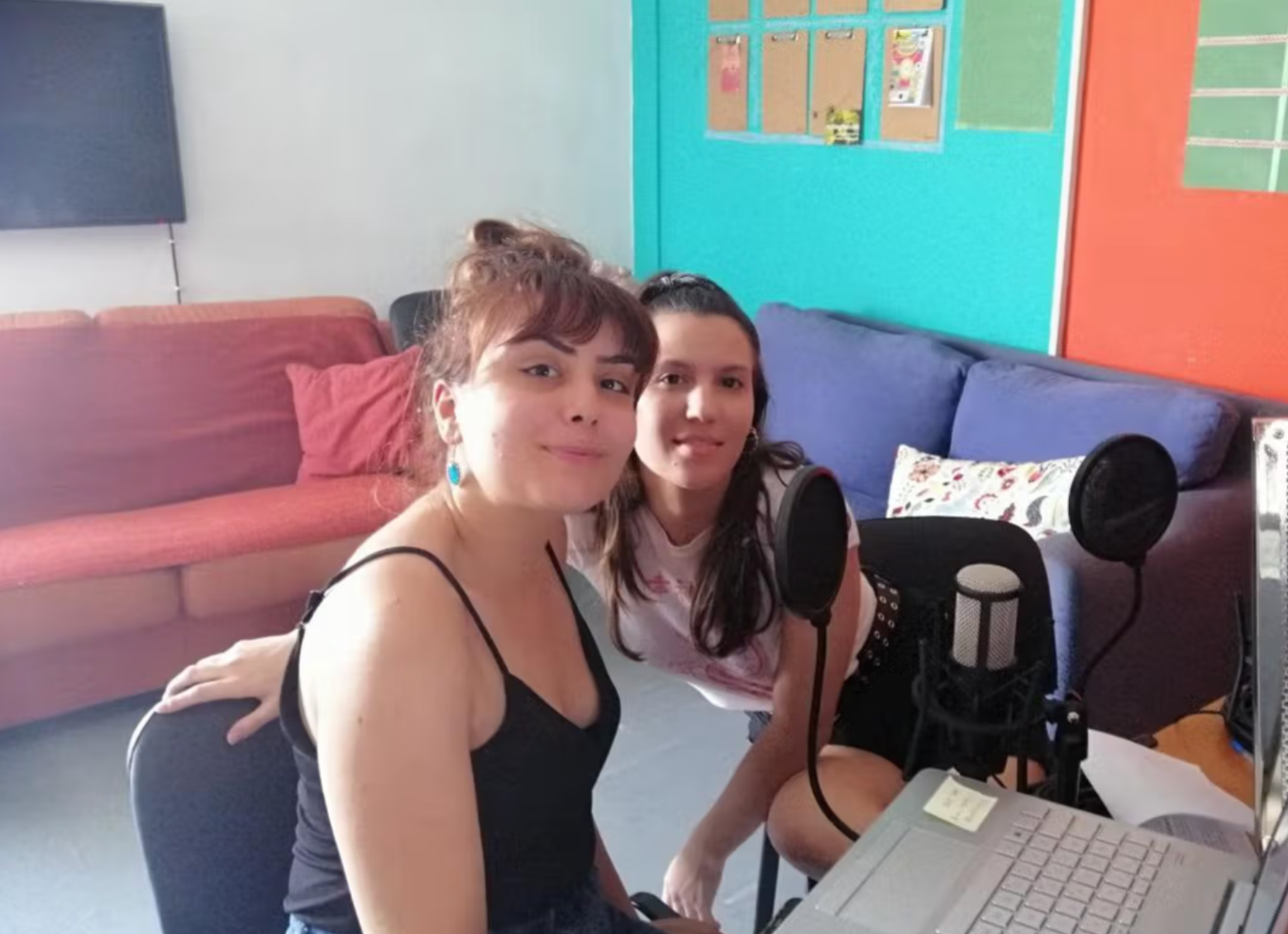
This student-led initiative involved the collaborative production of a podcast series on the subject of the “politics of death”. Applications for participation in the initiative were open to all undergraduate students (120) participating in the course Anthropology of Death taught by Prof. Papailias, as well as Prof. Papailias master’s and doctoral candidates working on related topics. Ten students participated and Prof. Papailias herself, producing podcasts individually and in small groups.
The topics on which the students created podcasts drew on the theoretical framework and empirical examples of the course in order to address pressing issues and topics of contemporary society, linking local/national events and concerns to global discussions and movements, as well as popular culture - from femicide and protests against police violence to the handling/disposal of the dead bodies infected by Covid-19 and those of refugees and migrants.
Through this project, students found a way to make their research and social/political concerns developed in the context of academic courses known to a general public, something that rarely happens in the Greek context. At the same time, they had the opportunity to receive feedback from the public who listened to their podcasts on their respective platforms and/or attended the community-facing event, thus creating important links between science and society. The podcast's second season launched in May 2022.
Organized by Penelope Papailias, University of Thessaly
Facilitators: Pantelis Probonas & Penny Paspali, University of Thessaly
Season 2:
The second season of the Apo to Pempto (Broadcasting from the 5th floor!) podcast takes up the politics of naming and particularly the geographical, social and cultural dimensions of names, gendered genealogies and essentialisms. The podcasts were created for the undergraduate class Digital Storytelling and Multimodal Anthropology.
Polga < Olga < Helga
Olga Parthenidou-Fotou | 7’
Summary: You have seven minutes at your disposal to speak about your name. Don’t ask me what you will say, just say the first thing that come to mind. Don’t tell a banal story though. If you need to, tell a lie… Put in two or three different geographical locations, demonstrate an interesting trajectory that your name has made over time… Add a little sauce, a little spice… and why not throw in that you have two last names instead of one. Wait, what am I saying? That’s all true!
Morosouolaomicron
Dimitra Morosou | 7’
Summary: How political can a first and last name be? Affect is engrained in words but also sounds. A podcast syncs with the time and place that you find yourself and hear a voice that is purposely warped on your headphones. Parallel sounds create a soundscape that exhorts you to perceive yourself as an listener within an experience.
Nefeli. Identity or insight?
Nefeli Zioga
Summary: Nefeli (in Greek “cloud”), a name connected to myth and nature, introduces herself. A flashback through the sounds and etymology of the name demands e-motion on a narrative level. Care and acceptance is the final stage.
This year’s podcast productions aimed to be more artistic productions centered on subjectivies, relations and environments, rather than the “journalistic” or the logocentric style of making podcasts («radio» presenter, talking heads). Thus, the focus was on the formation of soundscapes and the capturing of everyday “ambient” sounds or digital sounds, as a way to explore how we can “do sensory ethnography” or how to do ethnography by exploiting the ontology of sound (as a non-static materiality) to address anthropological concepts and methodologies, such as reflexivity, researcher’s positionality, or how to “bring the atmosphere” of an interview, etc.
Organized by Penelope Papailias, University of Thessaly
Assistant: Penny Paspali, University of Thessaly
Season 4:
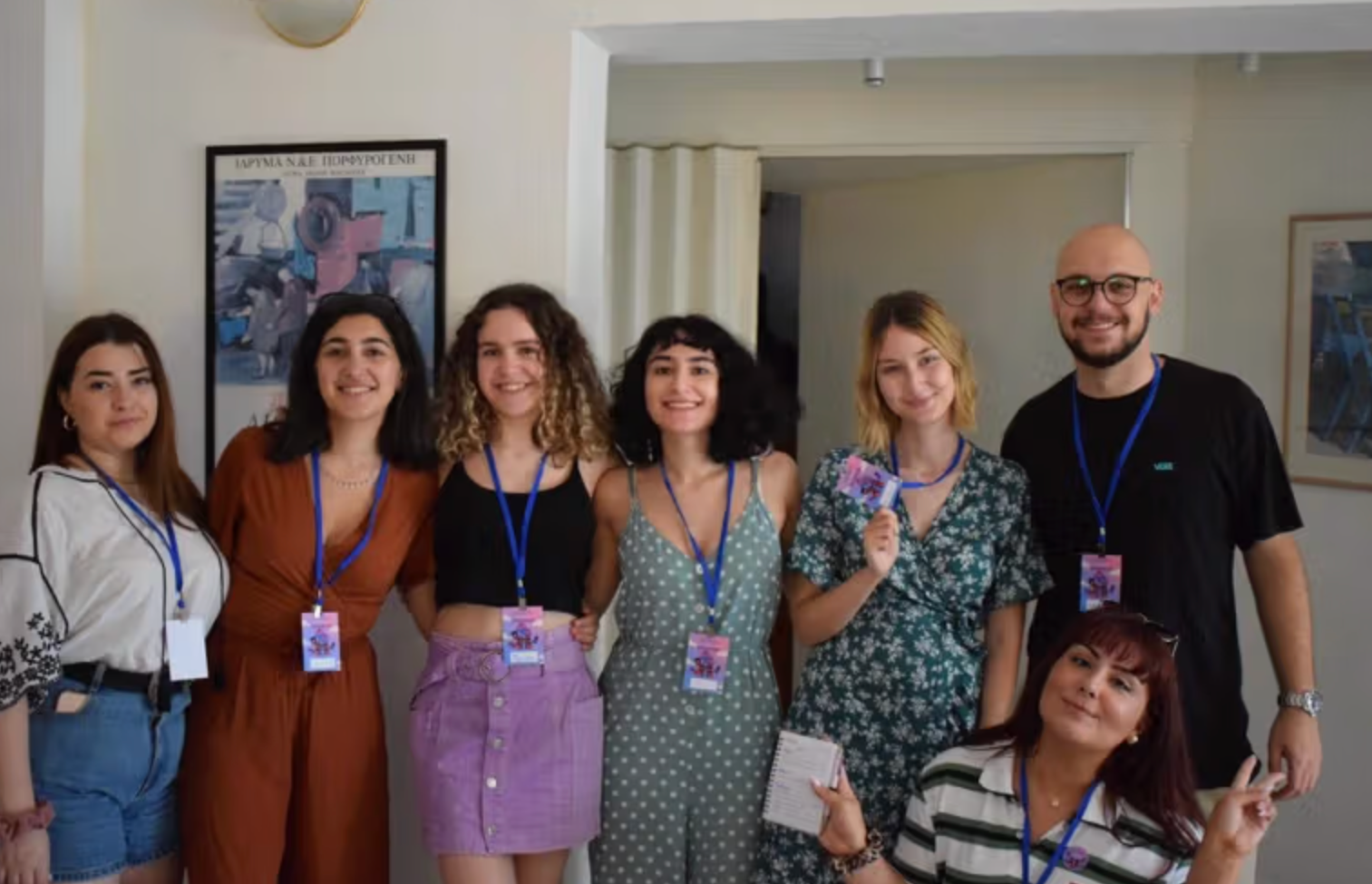
Ιn the spring of 2024, in the context of graduate course at the Department of History, Archaeology and Social Anthropology of the University of Thessaly, entitled “Black Geographies: From the Middle Passage and the Black Mediterranean to Afrofuturism.” taught by Penelope Papasilias, graduate students developed a podcast series on environmental justice, entitled “Debris“ (Φερτά Υλικά). Τhe podcast responds to the catastrophic double flood event of September 2023 in Volos, Pelion and Thessaly, considering this event through the lens of decolonial ecology, black geography andenvironmental humanities, which have illuminated the strangulating grip of racism, colonialism, patriarchy and capitalism on the water, the air, the land and life itself. Through ethnographic and historical research, the students present local case studies of the after/lives of this event, pointing to alternative modes of repair and restitution than simply getting back to 'business as usual' and erecting bulwarks in face of the floods to come. The podcasts were uploaded as the 4th season of “Apo to Pempto” podcast series of UTH Laboratory of Social Anthropology to podcast platforms on May 24, 2024 and are available online. The series is comprised of the following podcasts (titles are translated from the Greek).
1. Penelope Papailias, Debris and black geographies
2. Konstantina Efaplomata, We will be pulled in by the tide and never return
3. Antonis Petras, Mud, collective trauma and individual responsibility
4. Conor Smith, ‘Nothing is going to save us. If we don’t save ourselves we’re dead.’ Plantionocene, Fugitivity and Self-Protection on the Thessalian Plain
5. Penny Paspali, Codα: Whatever is solid and fixed melts into mud
Name of each participant and collaborator:
Konstantina Efaplomata
Antonis Petras
Conor Smith
Penny Paspali